
Waiting for what?
An alternative view of the current catastrophe

Imagine an earthquake traps you and your family inside your home. Your pantry has around seven days worth of food in it and there is no indication when you’ll be rescued. Would you continue eating as normal, or stretch your supplies as much as possible?
That sort of choice seems to be playing out at a national level with fuel right now. The source of our supply has been interrupted and there is no sign things will return to normal (plus lots of signs they won’t). But no New Zealander is being asked to change their behaviour. If you believe the finance minister when she says we have 58 days worth of petrol in storage (here in tanks plus on ships sailing towards us), your first question should be - 58 days of consumption at what level? And if the answer is “at a normal level” then should we consider cutting back?
“Don’t panic yet” is the government’s key message, reported with little counter-argument on last night’s news bulletin. Don’t panic, we have seven days worth of food. Tomorrow, we will have six days of food. The day after that we will have five days of food. That is so much food!
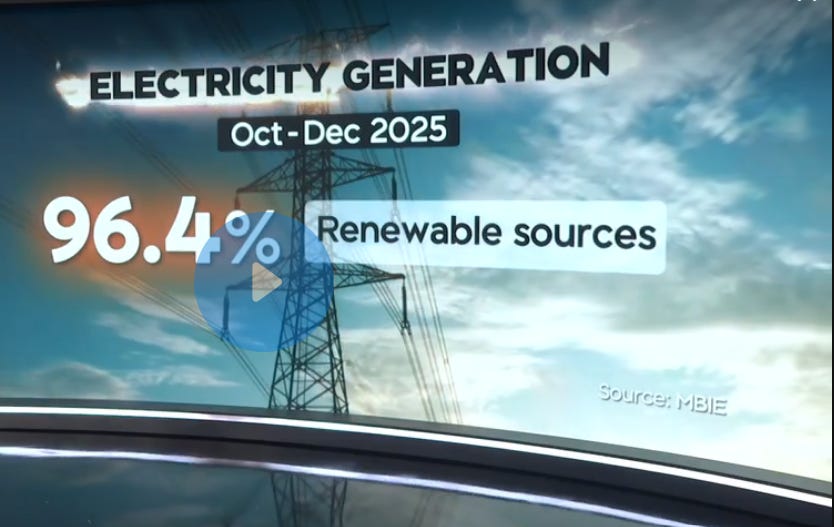
What is the alternative to eating normally? “Muldoon-era carless days”, according to the headlines - framing collective restraint in about the most negative language possible. Later coverage included an interesting story about a surge in demand for electric cars and a graphical explainer on New Zealand’s grid electricity which didn’t feel quite relevant enough to earn its spot.
I spoke to two great brains on my radio show this week, trying to make sense of what should happen next. First Dr Matt Boyd, who talked about a recent New Zealand study which modeled a similar situation to the one we’re facing:
“Consultants were instructed to consider a no-fuel supply scenario. They concluded that we could muddle through [90 days] if we maintained Level Four Covid Lockdown rates of consumption.”
Muddling through is important because running out is, of course, about much more than your car having an empty tank:
“Our road transport is dependent on diesel. Our food comes from farms using liquid fuel-driven machinery. Fuel drives food from the farm to the table.”
My other guest was Retired Major General John G Howard, a New Zealander who rose right to the top of the US military and is now initiating a national conversation around security (including food security). Howard is bewildered that we don’t talk about risk and resilience more as a country. It’s tempting to blame the government for this but he says it’s the responsibility of citizens and private companies to come to the table too. If you’re selling kiwifruit to the world, national security threats are, after all, an existential threat to business.
It’s not just about carless days he says (though it might eventually be partly about that). It’s about thoughtfully and actively going through our national risks and coming up with a well-funded plan to prepare for them.
Right now, Boyd says, we should already be moving to cut fuel consumption. Post-Covid craziness, it would be understandable if the Government felt reluctant to ask us to do anything for the good of our neighbour, but lockdowns aren’t the only time New Zealanders have been asked to act together in the public interest. Whenever there is an electricity shortage and they ask us to cut back, we do; when Watercare tells Auckland the dams are low, we hold off on long showers until they’re full again (the voluntary stuff is sometimes backed up by sprinkler restrictions that nobody grumbles too much about). We are good at taking collective action when faced with an imminent crisis; or, to put it another way, we are only good at taking collective action when faced with an imminent crisis.
If we have just 58 days worth of petrol left, would it be worth asking people to bike instead of drive when they can, to take a train instead of a taxi? Would it be worth changing the message from “don’t panic” to “conserve when you can”? Get the schools in behind it, find some way of tracking the progress we’re making, create a campaign to connect the decisions we make about how we travel to the supermarket, with the food we see on the shelves when we get there?
It’s great that our electricity is 97 per cent renewable, but our energy-use as a whole is less than 50% renewable. If we were treated with intelligence rather than told not to panic, couldn’t we be convinced to make the other half go a little further?
It’s all very well considering asking Kiwis to bike or cut back on using their car but there’s one big problem: it’s the ‘no one tells me what to do’ attitude so often displayed, usually by Kiwi blokes and often the proud owners of the biggest, ugliest trucks mankind has so far invented.
I see a parallel with our coalition governments approach to fossil fuels and the Trump government.
Quote from the UK Guardian “ Trump’s war on Iran has triggered shocks in fossil fuel markets, exposing the perils of an agenda that prioritizes “drill, baby, drill” while sabotaging renewable power and energy efficiency in the US, experts and advocates say.
The US-Israeli war on Iran has already led to hundreds of deaths, created an ecological crisis linked to strikes on oil depots and sent fossil fuel prices haywire across the globe.
Critics say the war also shows the inherent instability of dependence on oil and gas: unlike wind and solar power, fossil fuel-based energy requires constant inputs of products whose availability and costs are determined by the global market.”